



Davos 2026 - Manager of Infinite Minds energized by the Power of the Sun
The World Economic Forum in Davos 2026 – held between January 19 and 23 – marked what many experts called "The Year AI Came of Age".
ARTIFICIAL INTELLIGENCE JOURNEY
2/13/20266 min read


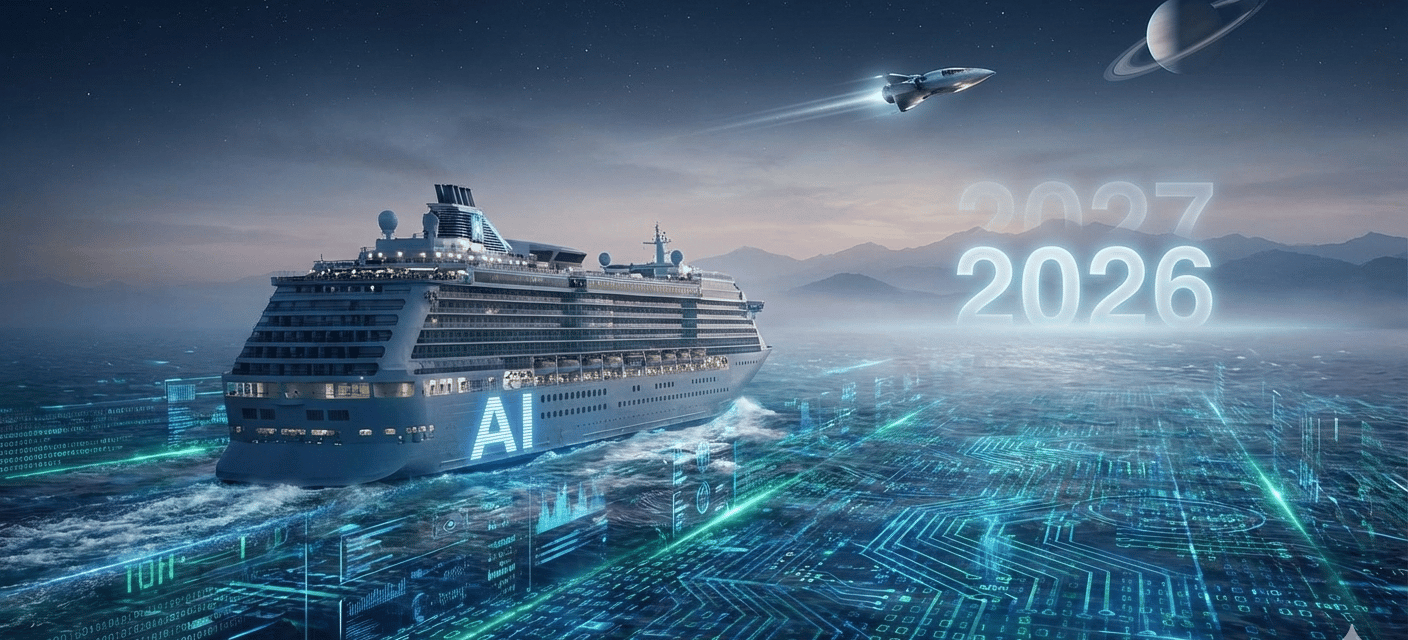
Business Strategy powered by AI
The 2026 World Economic Forum (WEF) in Davos has just concluded under the theme "A Spirit of Dialogue," and the message for the corporate world is clear: the phase of "enchantment" with Artificial Intelligence is over. We have now entered the phase of infrastructure and execution. While in 2024 and 2025 companies were testing pilots, in 2026 AI has become the operating system of the global economy.
Starting now, we are diving into a special series on the perspectives of AI advancements for the coming years. Check out the first two fundamental insights that emerged from the Swiss mountains, set to shape leadership decisions this year.
1. You Are No Longer a User, You Are a Manager – Satya Nadella’s Insight (Microsoft)
The Era of the Manager of Infinite Minds: The Legacy of Davos 2026
The 2026 World Economic Forum consolidated a definitive rupture in the perception of artificial intelligence: the transition from a "query assistant" model to that of an "autonomous operational agent." Satya Nadella, in an insight already echoing through high-level corporate circles, redefined the role of the knowledge worker as a Manager of Infinite Minds. This new paradigm establishes that a professional's value no longer resides in manual task execution, but in their ability to orchestrate an invisible and tireless workforce. Seeing AI merely as a text tool is a strategic error that condemns careers to obsolescence; the new frontier is the leadership of systems that think and act at scale.
In practice, this transformation requires the focus to shift from the isolated "prompt" to the Agentic Workflow. Being an AI manager means designing complex processes where multiple agents collaborate—planning, testing, and implementing—while the human acts as the strategist architect and the final quality arbiter. The ability to delegate tasks to digital entities and critically review their outputs has become the core competency of modern leadership. It is no longer about knowing how to write a command, but about knowing how to design an ecosystem where work flows automatedly and intelligently, solving problems in minutes that previously consumed weeks of human effort.
Therefore, the provocation left at Davos is a call to action for immediate upskilling: stop learning to use AI as a dictionary and start studying it as a management infrastructure. The professional who masters workflow orchestration ceases to be an executor and becomes a results multiplier, capable of managing a virtually infinite productive capacity. The question defining success in 2026 is not what you can do with AI, but how many agents you can lead in a coordinated way to achieve a business objective. The future belongs to process architects, not mere tool users.
Strategic Sources and References:
World Economic Forum: The Future of Jobs Report: The Rise of Agentic Workflows
World Economic Forum (Davos 2026): Satya Nadella on the New Era of AI Orchestration
Harvard Business Review: Leading the Invisible Team: Managing Autonomous AI Agents
2. AI Gained a Body and Will Have Life through the Power of the Sun – Elon Musk’s Insight (Tesla & SpaceX)
At Davos 2026, the convergence of LLMs and Robotics was one of the major themes. With the promise of affordable humanoid robots arriving as early as 2027, the horizon has shifted. It doesn't matter if you work in an office or a factory: automation is now set to interact with the physical world—think robots handling logistics, physical assistants in hospitals, or autonomous infrastructure maintenance. If you understand how digital intelligence translates into physical action, you will possess one of the most sought-after profiles of the decade.
The Robotics Revolution – Powered by Artificial Intelligence and the Sun
The final frontier between the digital and physical was breached at Davos 2026, with the announcement of the full convergence between Large Language Models (LLMs) and advanced robotics. It became clear that artificial intelligence is no longer confined to screens; it now possesses a "body" of metal and sensors. The promise of affordable and functional humanoid robots for the 2027 horizon transforms AI into a physical workforce, capable of understanding natural language commands and translating them into complex motor actions in the real world. This evolution marks the end of static automation and the beginning of the era of Physical AI, where machines learn to navigate and interact with the human environment intuitively.
For the professional looking to develop in this field, the focus of study must shift to Edge Computing and robotic control architectures. The need to process massive volumes of data locally—allowing a robot to make decisions in milliseconds without relying on the cloud—makes knowledge of edge infrastructure a critical differentiator. This is not just about robots on assembly lines, but about physical assistants in hospital environments, logistics specialists organizing warehouses autonomously, and maintenance units ensuring the integrity of urban infrastructure without constant supervision. Understanding how digital intelligence translates into torque and movement is the new "gold standard" skill in the market.
Elon Musk’s vision presented at Davos 2026 corroborates this new level of transition from abstract AI to a constant physical presence in human daily life. With the prediction that Tesla will begin commercializing the Optimus robot to the general public as early as 2027, Musk signals that AI has reached a level of motor and cognitive maturity capable of performing domestic and industrial tasks autonomously. For the leader of xAI, the future of technology lies not just in processing data, but in interacting with the material world through billions of humanoids powered by electricity generated by mechanisms launched into space to absorb and channel the Power of the Sun, the primary energy source. Robots will act as a new layer of social infrastructure, meeting needs ranging from domestic care to the maintenance of essential services—basically being capable of performing any task.
This new "Physical AI" horizon requires a complete reconfiguration of supply chains and hardware design. Unlike static devices, Tesla's humanoids use neural networks trained on supercomputers (like the Dojo cluster) to learn complex movements and navigate dynamic environments designed for humans. Musk's strategy is to turn the robot into a scalable platform, reducing production costs through economies of scale so that Optimus becomes as common as a car or a smartphone. The focus shifts from "Chat AI" to "Action AI," where code translates into force, precision, and direct physical assistance.
In other words, we are at the threshold of a paradigm shift that redefines what we understand by productivity and presence. Physical automation will allow humanity to delegate dangerous, unhealthy, or purely repetitive tasks to robotic agents endowed with logical reasoning and tactile sensitivity. As these machines become integral parts of offices and factories, the most sought-after professional will be the one capable of integrating these systems into the human workflow, ensuring that the collaboration between flesh and metal is efficient and safe. We are witnessing the transition from the "Internet of Things" to the "Internet of Actions," where the code written today becomes the step taken by the machine tomorrow.
In the long term, the omnipresence of billions of humanoid robots promises to redefine the fundamentals of the global economy and the labor market. Musk projects an era of abundance where the cost of goods and services will be drastically reduced by robotic labor, allowing humans to focus on high-creativity activities and strategic supervision. However, this transition also imposes immense challenges in terms of safety and ethics in the coexistence of organic and synthetic species. In 2026, preparing for this physical future is no longer a choice, but an imperative for companies and individuals who wish to thrive in a world where the next "coworker" may be made of metal and silicon.
Sources and References for the Robotics Revolution:
Tesla AI & Robotics: Optimus: The General Purpose Humanoid Robot Project
IEEE Spectrum: The Engineering Challenges of Humanoid Robots for Domestic Use
World Economic Forum (Davos 2026): Elon Musk - The Energy is about The Sun
Conclusion: The Awakening of Orchestration and Physical Presence
The synthesis of the discussions at Davos 2026 reveals that artificial intelligence has moved beyond being a futuristic promise to become the connective tissue of the new global economy. As we transition from the role of mere users to that of managers—as pointed out by Satya Nadella—we realize that true competitive advantage no longer resides in technical execution, but in the sophistication of strategic design. The elite professional is now one who acts as a maestro of agentic flows, transforming the complexity of algorithms into business results with an agility unprecedented in corporate history.
Simultaneously, the silicon frontier has broken its digital barriers to gain body and movement, signaling the dawn of an era where Physical AI, driven by Elon Musk's vision, will inhabit our material daily lives. The integration of language models and advanced robotics does not merely automate tasks; it redefines our very interaction with the physical world, from industrial logistics to domestic care. This convergence between artificial intellect and motor capability demands a profound reconfiguration of our skills, prioritizing a system architecture that joins machine precision with human vision.
In the face of this landscape of transformations—as swift as they are deep—understanding the pillars of orchestration and physical automation is only the first step to successfully navigating this decade. This is the moment to expand the limited view of isolated tools and embrace AI as the infrastructure of a new era.
Innovation
Technology and Digital Transformation.
contact us
Apprenticeship
© 2025 - 2026. All rights reserved.