



The 5 Pillars of AI Maturity: A Retrospective on 2025
It wasn't just about the raw power of Large Language Models (LLMs), but their reliability and seamless integration into our daily lives.
ARTIFICIAL INTELLIGENCE JOURNEY
1/24/20269 min read


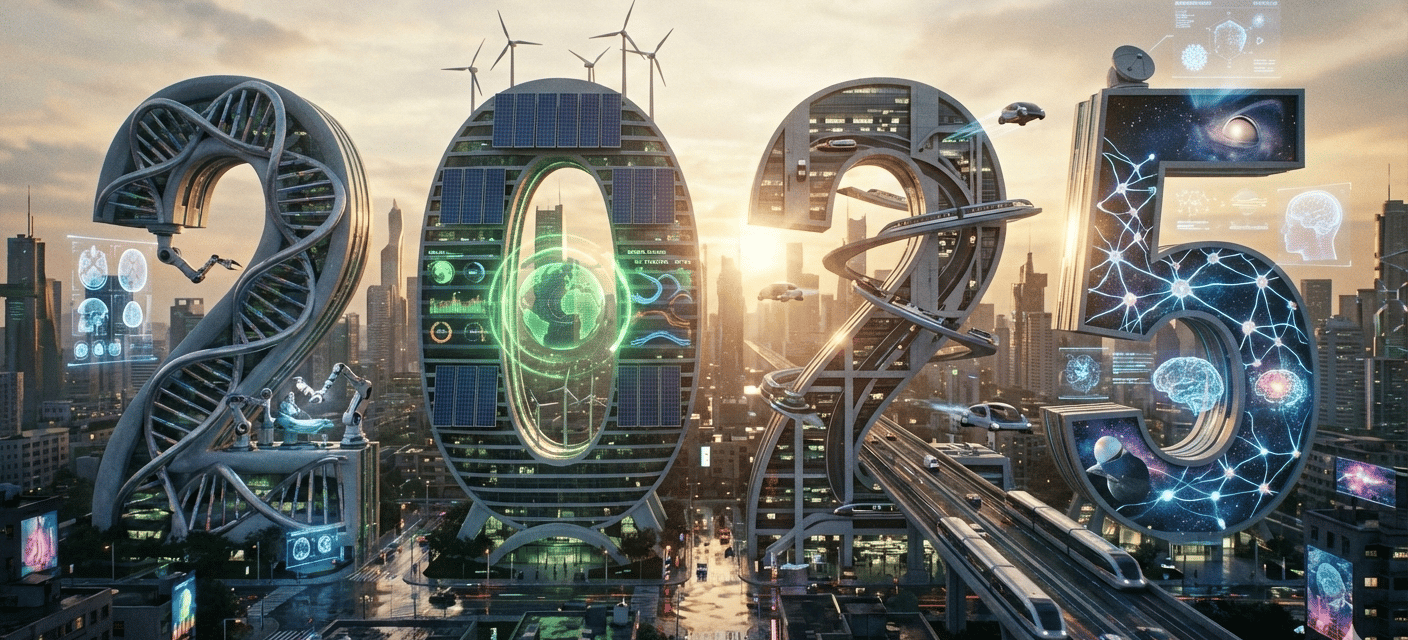
The 5 Pillars of AI Maturity
If 2023 was the year of 'wow' and 2024 the year of experimentation, 2025 was, without a doubt, the year of integration. The previous year was the turning point where Artificial Intelligence stopped being a technical curiosity or a 'chat' tool to become the backbone of modern productivity and science. We moved from seeing AI as a mere feature in a browser tab to accepting it as the invisible infrastructure that sustains our economy and daily lives.
Today, in January 2026, we look back and see that the big victory of 2025 was not just the power of the models, but their reliability and invisible integration into everyday life.
Here are the five biggest highlights and areas of AI consolidation in 2025:
1. Precision Medicine and Drug Discovery
In 2025, healthcare took a leap that would have taken decades in the traditional model. AI has become indispensable in early diagnosis, analyzing imaging tests with precision exceeding the human average and cross-referencing genetic data to predict diseases even before the first symptoms appear. However, the true highlight was the acceleration in new drug discovery. Protein simulation processes that once took years are now resolved in weeks, allowing personalized treatments for rare diseases to reach patients with unprecedented speed.
This was, perhaps, the area of greatest human impact. AI has become a safe tool for biologists and chemists, enabling simulations that would previously have taken decades in the lab. See a magnificent real-world example below:
The AlphaFold 3 Revolution in Modern Science
Biotechnology and precision medicine reached a historic milestone in 2025 through the large-scale implementation of AlphaFold 3, developed by Google DeepMind. This artificial intelligence tool has radically transformed the quest for cures by enabling the identification of thousands of drug candidate compounds for neurodegenerative and psychiatric disorders, such as Alzheimer's and depression. By accurately predicting how proteins interact with other molecules, the technology allowed researchers to visualize previously invisible therapeutic targets, accelerating screening processes that would have previously taken decades in conventional laboratories.
Beyond the boundaries of human health, AI's ability to decipher the complex "puzzle of life" has generated significant advances in sustainability and materials engineering. As documented by the CAS.org portal and leading cellular research institutes, assisted molecular design has allowed for the creation of optimized enzymes for the biodegradation of hard-to-recycle plastics, offering a tangible solution to the global environmental crisis. Simultaneously, this intelligence has been applied to the discovery of new electrolytes for the development of solid-state batteries, which represent the future of energy storage by being safer, denser, and more efficient than current models.
The impact of these discoveries consolidates artificial intelligence not just as a technological accessory, but as the central engine of a new scientific era. The integration between structural biology and high-performance computing is allowing an unprecedented exploration of chemical space, reducing innovation costs and democratizing access to high-level discoveries. This new paradigm redefines our relationship with the microscopic world, proving that the union between advanced algorithms and human curiosity is the key to solving the most urgent challenges of the 21st century.
Sources and Further Reading:
Google DeepMind: AlphaFold 3: Predicting the structure and interactions of all of life's molecules
CAS (American Chemical Society): The impact of AI on drug discovery and molecular design
Nature Journal: How AlphaFold 3 could revolutionize drug design
2. Hyper-Personalized Education
The "one-size-fits-all" model in education definitively began to crumble in 2025. AI established itself as the omnipresent tutor, capable of adapting the pace, style, and learning content for each student individually. It has become a cohesive tool to combat educational inequality through tutors that, with proper human supervision, adapt to each student's rhythm, serving as a 24/7 "study partner.
Educational Transformation through Artificial Intelligence
The advent of adaptive learning represents an unprecedented paradigm shift in the contemporary school environment. Through sophisticated algorithms, today's educational platforms can map each student's cognitive gaps with surgical precision, identifying not only where they fail but the root of their misunderstanding. This continuous analysis allows for the instant generation of personalized learning paths and tailored exercises, ensuring that the teaching pace respects the student's individuality and promotes a much deeper and more effective knowledge absorption than traditional mass teaching methods.
Parallel to this evolution, artificial intelligence emerges as a strategic ally for the teaching staff, taking on the heavy burden of administrative tasks and the grading of basic assessments. By automating bureaucratic processes and repetitive feedback, technology returns the most scarce and valuable resource to educators: time. With this operational freedom, teachers can transition from being mere transmitters of information to intellectual mentors, dedicating themselves fully to the guidance of each student and the development of critical skills that the machine cannot yet replicate.
This new educational dynamic allows the school's focus to shift toward strengthening socio-emotional skills, such as empathy, collaboration, and resilience. In an increasingly digital world, the human role in education becomes even more essential to mediate conflicts, stimulate critical thinking, and guide the ethical development of citizens. Thus, the integration of algorithmic efficiency and pedagogical sensitivity shapes a future where technology does not replace the teacher but empowers them to form more complete human beings prepared for the challenges of the 21st century.
Sources and References for Further Reading:
World Economic Forum: How AI is shaping the future of education and personalized learning
Khan Academy: The impact of Khanmigo and AI tutors on student proficiency
3. Software Engineering and the Era of Agents
Software development has undergone its greatest transformation since the creation of the internet. By 2025, manual code writing became a niche or supervisory task. Artificial Intelligence established itself as the "gold standard" in systems development. We no longer write code "from scratch" for routine tasks; instead, AI manages the migration of legacy systems and real-time debugging.
The Rise of Coding Agents and Systemic Modernization
Software engineering is undergoing a structural transformation with the transition from code assistants, formerly known as "copilots," to so-called Autonomous Coding Agents. Unlike autocomplete tools, these agents possess the cognitive capabilities to plan complex architectures, write refined logic, execute unit tests, and deploy complete features without constant human intervention. This evolution allows the Software Development Life Cycle (SDLC) to become significantly more agile, shifting the human developer's role from "line writer" to "architect and logic reviewer," focusing on strategy and user experience.
One of the greatest impacts of this new era is the accelerated resolution of technical debt that haunts large financial and government institutions. Artificial intelligence is now capable of processing and translating billions of lines of code in legacy languages, such as COBOL and obsolete Java versions, into modern, cloud-native frameworks. What previously required high-risk migration projects, costing millions of dollars and lasting years, can now be executed automatically in a few months, ensuring business continuity with a renewed and secure technological infrastructure.
This mass modernization not only eliminates operational bottlenecks but also democratizes innovation within traditional companies. By converting old, monolithic systems into efficient microservices, AI frees up human and financial resources for the creation of new digital products. The result is a more resilient technological ecosystem, where the maintenance of old systems stops being a drain on energy and becomes a solid foundation for implementing new disruptive technologies, such as quantum computing and real-time data analysis.
Sources and References for Further Reading:
IBM Think: Modernizing legacy infrastructure with generative AI
Gartner: Top Strategic Technology Trends: AI Software Engineering
GitHub Resources: The rise of AI agents and the future of the developer experience
4. Productivity and Workflow Agents
In the corporate environment, "Chat AI" has been replaced by "Action AI." By 2025, virtual assistants stopped merely suggesting text and started executing tasks: scheduling complex meetings across multiple time zones, organizing travel based on implicit preferences, and managing email inboxes autonomously. What we are witnessing is the transition from "chatbot" to "agent" that performs complex end-to-end tasks. The focus has shifted from content generation to process orchestration, freeing professionals for strategic thinking.
The Rise of Digital Employees: Agentforce and Copilot Agents
The global corporate landscape is being reconfigured by the consolidation of ecosystems such as Salesforce Agentforce and Microsoft Copilot Agents, marking the definitive transition from assistive artificial intelligence to operational autonomy. Unlike traditional chatbots that rely on linear commands and constant supervision, these new "digital employees" can interpret complex intentions, access real-time data, and act proactively to resolve customer issues or optimize internal workflows. This paradigm shift allows organizations to delegate high-cognitive-load tasks to autonomous agents that operate seamlessly within CRM and ERP systems, raising productivity to unprecedented levels.
Strategic data from Gartner corroborates this trend, showing that the adoption of agents in enterprise applications has moved from peripheral experimentation to a central budgetary priority. Recent reports indicate that forward-thinking companies are already allocating more than 20% of their digital transformation budgets specifically to the development and implementation of this autonomous automation. This financial movement reflects market confidence in these tools' ability to generate a tangible return on investment (ROI), mitigating operational bottlenecks and enabling an agile response to the demands of a constantly changing market.
The long-term impact of this "hybrid workforce" lies in redefining the human role within corporations. By absorbing repetitive functions and mass data analysis processes, autonomous agents free up human capital to focus on innovation, ethical leadership, and creative strategy. In 2026, the maturity of these systems suggests that the true competitive advantage will reside not just in possessing the technology, but in the ability to orchestrate a harmonious collaboration between algorithmic precision and human sensitivity, creating far more resilient and scalable organizational ecosystems.
Sources and References for Further Reading:
Salesforce: Agentforce: What are AI agents and how they transform business
Microsoft: Microsoft 365 Copilot Wave 2: The arrival of Copilot Agents
Gartner: Gartner Top 10 Strategic Technology Trends for 2025: Agentic AI
5. Sustainability and Energy Management
With the climate crisis still in the center of attention, AI became the greatest ally of sustainability in 2025. It began managing smart energy grids for entire cities, optimizing the distribution of renewable sources (solar and wind) based on ultra-precise weather forecasts.
Additionally, in logistics, AI algorithms drastically reduced carbon emissions by optimizing global transport routes and supply chains, proving that economic efficiency and environmental responsibility can go hand in hand.
Technological Sustainability: The Synergy Between AI, 5G, and Environmental Efficiency
The convergence of artificial intelligence, 5G networks, and the Internet of Things (IoT) has ushered in a new era of environmental responsibility in global digital infrastructure. One of the most significant advances is the implementation of cooling systems for data centers that almost entirely eliminate water consumption—an increasingly scarce resource.
Through high-precision IoT sensors and the low-latency connectivity provided by 5G, AI algorithms monitor thermal variables in real-time, adjusting heat dissipation systems with a precision that manual methods could never achieve. This innovation not only preserves vital water resources but also optimizes the energy consumption of these critical facilities.
Leading companies in the sector, such as Microsoft and MCR Software, have spearheaded the discourse of AI as an indispensable tool for corporate sustainability. The application of predictive algorithms allows large corporations to minimize their environmental impacts strategically, moving beyond physical infrastructure. In transport logistics, for example, AI analyzes traffic patterns, weather conditions, and cargo demands to redesign routes in real-time. This dynamic adjustment results in a drastic reduction in fossil fuel combustion and, consequently, the carbon footprint of global operations, proving that operational efficiency and ecological preservation can go hand in hand.
In the long term, this technological integration sets a new standard for sustainable industrial development, where data intelligence becomes the primary asset against climate change. By transforming raw data from IoT devices into automated ecological decisions, organizations can anticipate failures and waste before they even occur. This predictive management model not only meets rigorous ESG (Environmental, Social, and Governance) goals but also redefines the concept of innovation, where a technology's success is measured as much by its performance as by its respect for the planet's regenerative limits.
Sources and References for Further Reading:
Microsoft Sustainability: How AI and data can accelerate the transition to a net-zero future
World Economic Forum: AI-Driven Energy Management for Green Data Centers
International Energy Agency (IEA): Data Centres and Data Transmission Networks - Analysis and Trends
Conclusion: The Human at the Helm of Progress
In revisiting 2025, it becomes clear that Artificial Intelligence has shifted from a promise to a foundation. From invisible molecules to global energy systems, from the classroom to the code that sustains the digital economy, AI has consolidated itself as a structural force that redefines rhythms, decisions, and possibilities. It is no longer about adopting technology, but about understanding that it is already part of the fabric that organizes science, business, and social life in a world advancing with speed and in increasingly intelligent layers.
In this new landscape, the true differentiator lies not just in the algorithms, but in the people who interact with them. Developing new skills has moved from an optional goal to a continuous commitment:
Critical Thinking: To question results, interpret data, and avoid blind automation.
Creativity: To envision unprecedented uses, improbable connections, and solutions that the machine alone cannot conceive.
Ethics: To guide decisions in an environment where efficiency without values can lead to profound and irreversible impacts.
The technology accelerates, but it is the human who defines the direction. Therefore, it is fundamental to understand where and how AI is used and, within this progressively expanding universe, to discover in your daily life—whether at work, study, or family life—how it can facilitate your routines. Investing in your own intellectual, emotional, and moral development becomes the most strategic act of the digital age. In a world shaped by intelligent systems, the human capacity to reflect, create, and act responsibly is what transforms technological advancement into true progress.
Innovation
Technology and Digital Transformation.
contact us
Apprenticeship
© 2025 - 2026. All rights reserved.